How to Remove Condenser Tubes: A Step-by-Step Retube Guide
Step-by-step condenser and heat exchanger tube removal: cut inside, pull stubs with a hydraulic puller, clear remaining stubs and clean holes for new tubes.
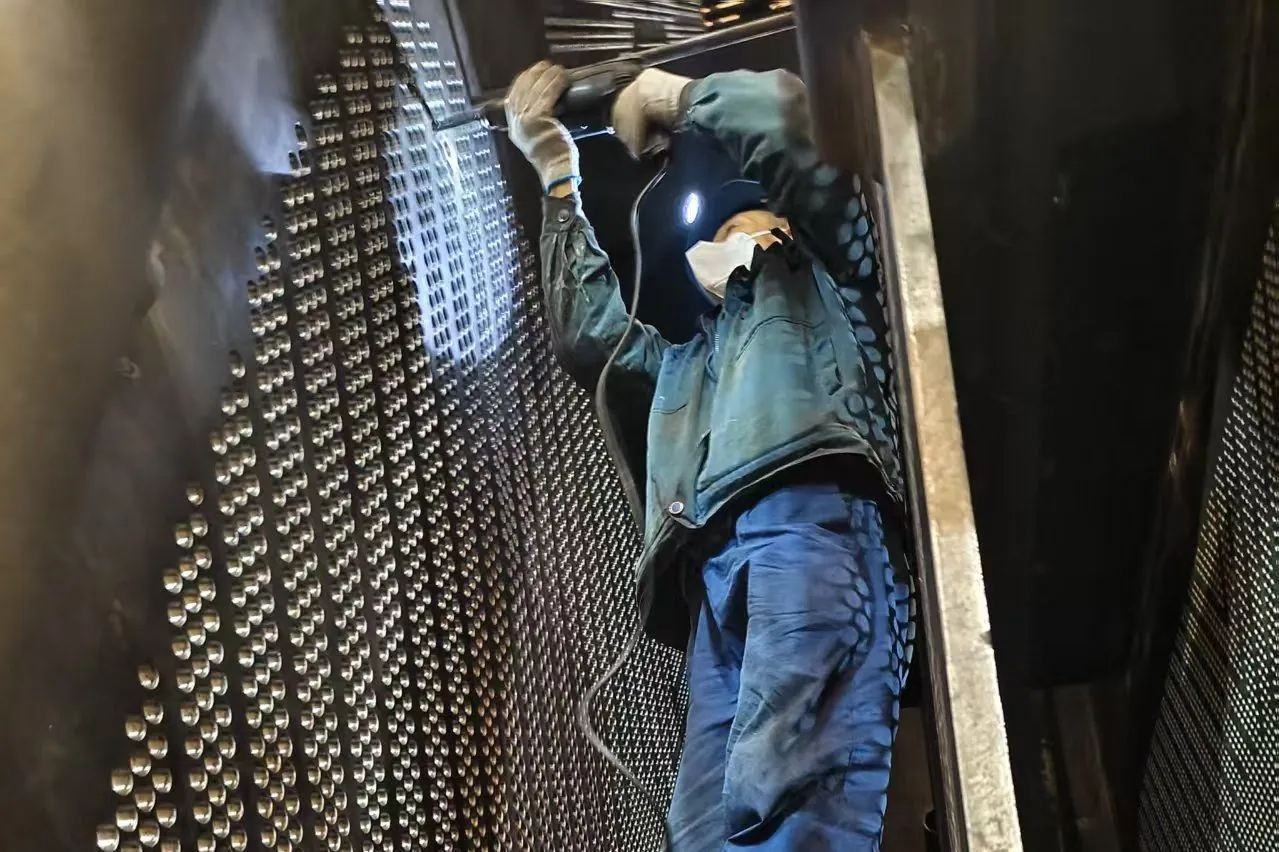
Removing old tubes is the part of a retube that decides how well the new tubes will seal. If the holes come out clean, round and undamaged, rolling or welding the new tubes is routine. If the holes are scored or oval, every later step gets harder.
This guide walks through a typical tube removal sequence for surface condensers and shell-and-tube heat exchangers, using Lanbo internal cutters, hydraulic tube pullers and hole cleaning tools. Exact times depend on site conditions, tube material, fouling and access.
Step 0: Collect the tube data
Before choosing tools, write down:
- Tube material (copper alloy, stainless steel, titanium, carbon steel)
- Tube OD and wall thickness (or BWG)
- Joint type: rolled, welded, or rolled and welded
- Tubesheet thickness and support plate positions
- Number of tubes to remove, and whether the full bundle or selected tubes are being replaced
These numbers decide the cutter size, the cut position, the spear size and the puller model.
Step 1: Cut the tube inside
The tube is held at each end by the tubesheet joint. The aim of cutting is to separate the long tube body from the short section held in the tubesheet, so that the joint can be pulled out on its own without dragging the whole tube through the hole.
Cutting just outside the tubesheet
The DNQ-A push-type tube cutter is inserted into the tube from the tubesheet face and driven by a tube roller. It cuts the tube from the inside at a point outside the tubesheet, so the stub left in the hole is short. Standard cutting depth is 70 mm; other depths are made to order. It covers tube OD φ12–φ38 mm, wall 0.3–2 mm, in copper, aluminium, titanium and stainless.
Cutting at a support plate
When a tube has to be separated at an intermediate support plate, the DNQ-B internal tube cutter cuts inside the tube at the support plate and is used together with a tube puller. Long-reach versions up to 5000 mm are made to order for this kind of work.
For small tubes up to φ25.4 mm with wall up to 1.5 mm, the pneumatic QTC small-tube cutter is another option.
Step 2: Pull the stub with a hydraulic tube puller
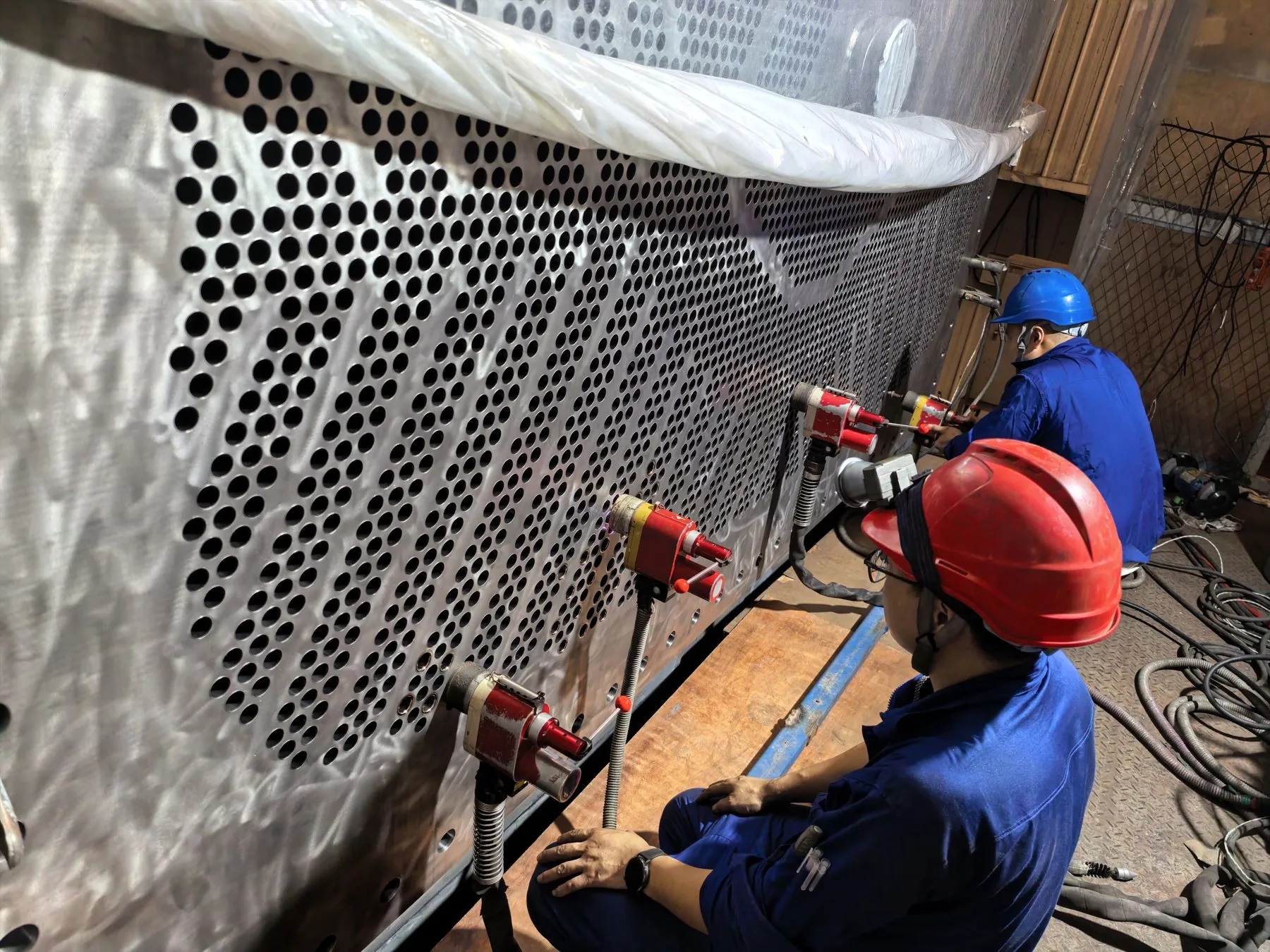
Once the tube is cut, the stub in the tubesheet is pulled out axially.
- Fit a spear (puller head) that matches the tube ID. The screw-type tube puller head covers tube OD φ7.94–φ32 mm and wall 0.4–2.5 mm (BWG 13–27).
- Thread or set the spear in the stub, mount the puller gun against the tubesheet face, and apply hydraulic pressure.
- The stub comes out along the tube axis. If a stub does not move at normal pressure, stop and check: the cut may be incomplete, or the spear may not be gripping.
The YKB-4 (screw type, 6200 kgf, φ12–φ28 mm) and YKB-5 (collet type, 6200 kgf, φ16–φ28 mm) are common choices for condenser tubes. For lighter work or where hydraulic supply is inconvenient, the QBG-F electric tube puller (4200 kgf, φ15–φ28 mm) or the LSB-2 manual tube puller (φ12–φ32 mm) can be used.
Step 3: Withdraw the tube body
With both ends separated from the tubesheets (and from any support plate if cut there), the tube body is withdrawn from one end. On long condenser tubes, plan the withdrawal direction, the laydown space and how scrap will be removed before you start.
Step 4: Clear remaining stubs
Some stubs may stay in the holes, for example where a cut was short or a tube was heavily fouled. A tube collapsing tool folds the short stub inward so it releases from the hole, and a tube knockout tool pushes it out. Use these in a controlled way and watch the hole. Do not mount them on a demolition hammer: impact and vibration can damage holes and nearby welds, and that damage is usually irreversible.
Step 5: Clean and inspect the holes
Before new tubes go in, each hole should be clean, dry and free of burrs.
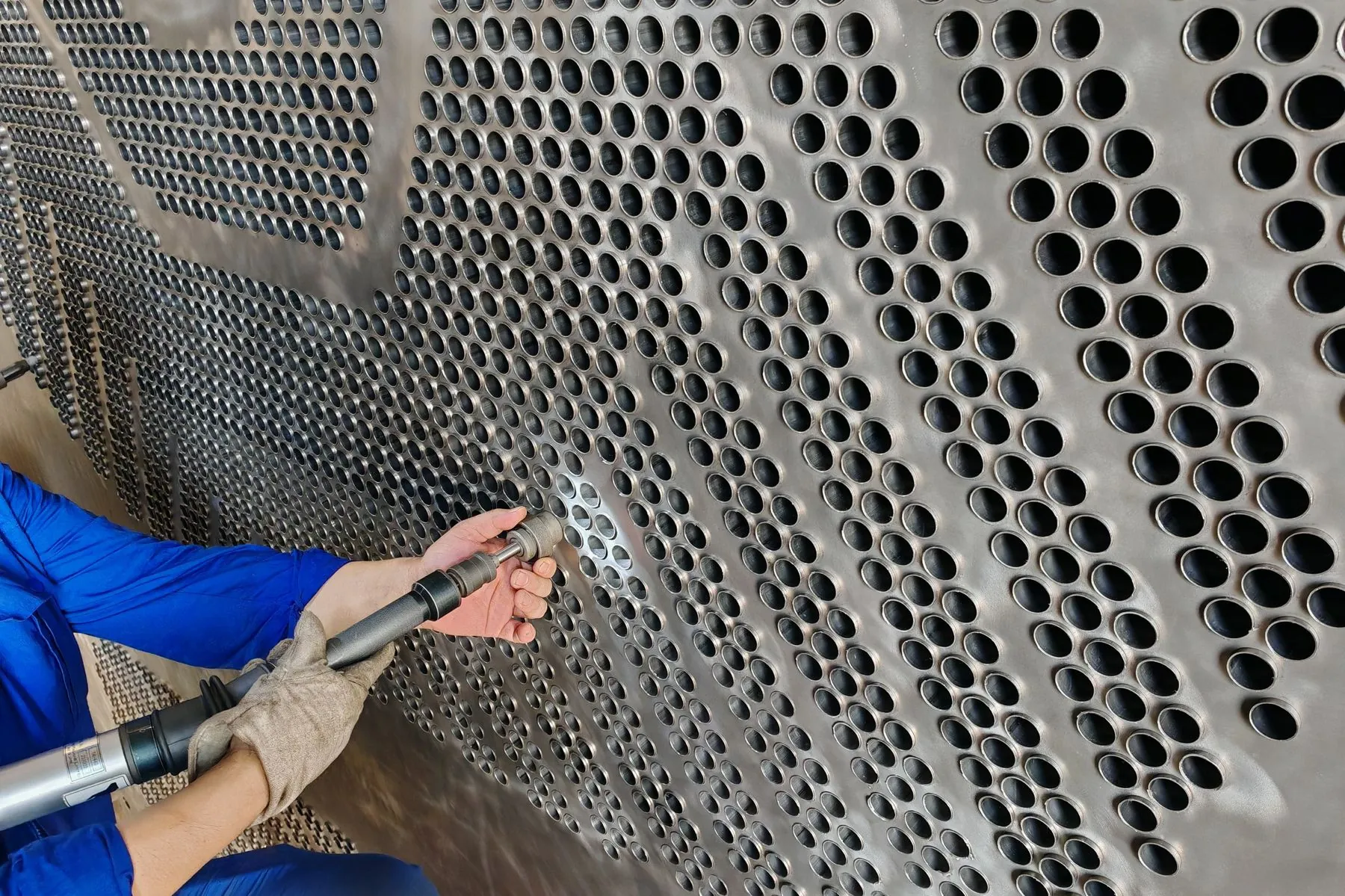
- QS-1 tube sheet hole brushes remove scale and residue.
- The QS-2 tube sheet hole polisher is used where the hole surface needs polishing.
- Inspect holes for scoring, ovality or cracks, and record any that need repair.
- CY-1 tube guides (φ9.52–φ32 mm) help guide new tubes through the bundle without catching on support plates.
Lanbo tools for this job
- DNQ-A Tube Cutter, Push Type and DNQ-B Internal Tube Cutter
- QTC Pneumatic Small-Tube Cutter
- YKB-4 / YKB-5 hydraulic tube pullers
- Tube Puller Head, Screw Type
- Tube Collapsing Tool and Tube Knockout Tool
- QS-1 Hole Brushes, QS-2 Hole Polisher, CY-1 Tube Guides
Lanbo also carries out retubing work on site. To get a tool list or a service proposal, send us the tube material, OD × wall thickness, tube count, joint type and tubesheet thickness. Request a quote.
FAQ
Should I cut both ends before pulling?
Usually yes. Cutting near each tubesheet lets each joint be pulled out as a short stub, which needs less force and puts less load on the hole than dragging the full tube through it.
Which is easier to set up, a screw-type or collet-type puller?
A screw-type spear threads into the tube ID and usually grips well, including on tight or fouled tubes. A collet type grips by expanding a collet in the tube and is quicker to set and release. The choice depends on tube material, wall and how many tubes you are pulling.
What if the tube is welded to the tubesheet?
The weld has to be removed or cut through before the stub can be pulled. Plan this step separately and check with the OEM procedure for the unit.
How long does a full bundle removal take?
It depends on tube count, length, material, fouling, access and crew size. We can give an estimate once we have your tube data and site conditions.