Tube Removal Without Tubesheet Damage: Why Not to Hammer Tubes
Hammering tubes out with a collapsing tool on a demolition hammer can damage tube holes and welds. Learn the safer method: cut inside, then pull hydraulically.
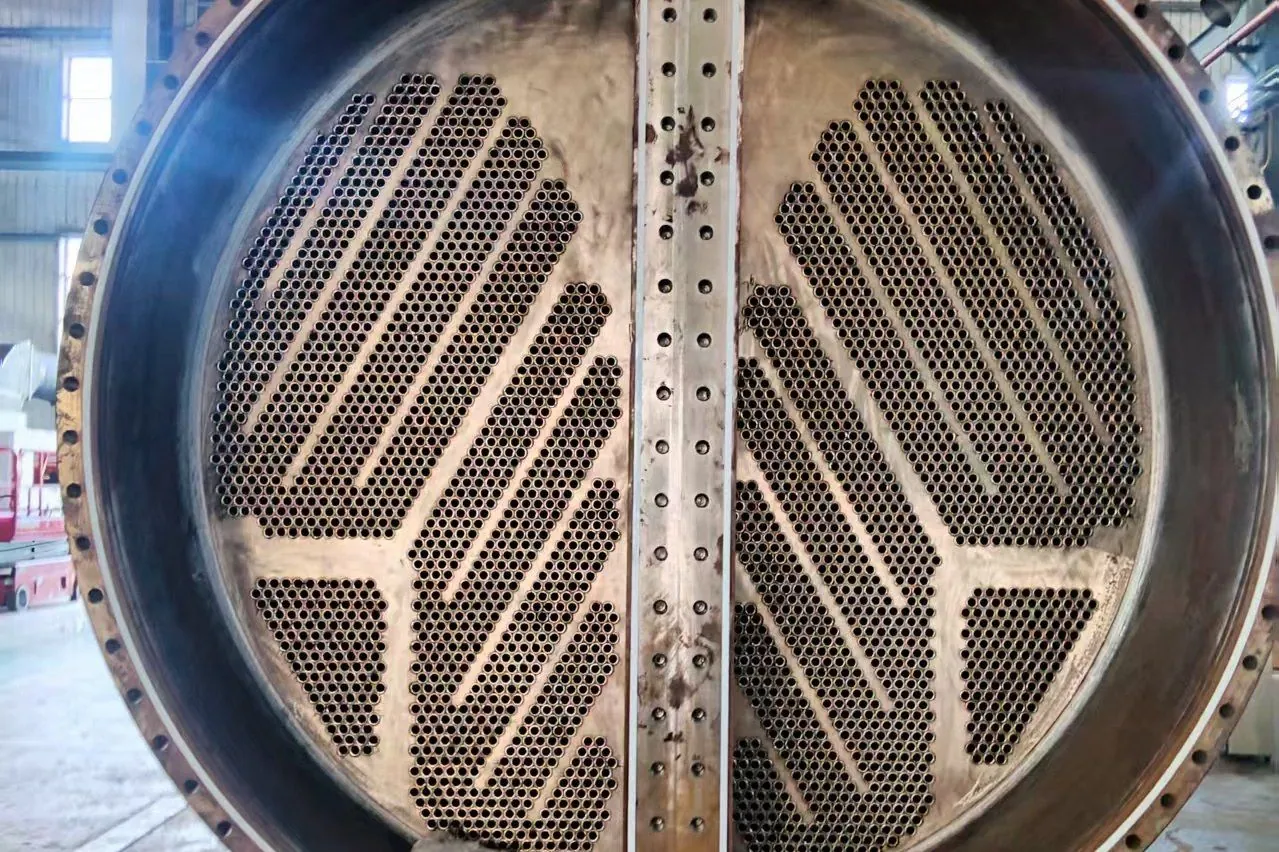
On many retube jobs the old tubes come out the fast way: a tube collapsing tool is fitted to the front of an electric demolition hammer, the tube end is hammered flat or folded inward, and the tube is then dragged out. It looks efficient at the start. The cost often shows up later, in the tubesheet.
Below: what the hammer does to the tubesheet, why it matters to the equipment maker (OEM) and the plant owner, and the method Lanbo recommends instead: cut the tube inside, then pull it with a hydraulic tube puller.
What a demolition hammer does to a tubesheet
A demolition hammer delivers repeated high-energy blows. When they go through a collapsing tool into a tube that is still rolled or welded into the tubesheet, the energy does not stay in the tube. It passes into the tube hole, the ligaments between holes and the tube-to-tubesheet joints around it.
Tube hole damage
Each impact can push the tube wall against the hole and drag hard edges across the hole surface. Typical results are scoring, burrs, ovality and enlarged holes. A new tube rolled into a scored or oval hole may not seal reliably, and the rolling torque that worked on the original holes may no longer give a sound joint.
Weld and joint damage
On welded exchangers, vibration and shock can crack tube-to-tubesheet welds, including welds on neighbouring tubes that are not being removed. Rolled joints next to the tube being hammered can also loosen. These defects may not be visible at the time; they can appear as leaks after the unit returns to service.
Ligament and tubesheet face damage
Thin ligaments between holes can deform under repeated impact, and cladding or coatings on the face can chip.
Why this damage matters to the OEM and the plant owner
The key point is that this damage is usually irreversible. A tube can be replaced; a tubesheet in many cases cannot be replaced economically on site. Holes that are oversized or cracked may need special repair procedures, oversize tubes, sleeves or plugging. Some damage cannot be repaired to the original design condition at all.
For the OEM, this means warranty and quality risk. For the plant owner, it means lost heat transfer area through plugged tubes, repeat outages and in some cases a tubesheet that limits the remaining life of the unit.
The recommended method: cut inside, then pull
- Cut the tube on the inside. An internal tube cutter is run into the tube and cuts it from the inside, just behind the tubesheet or at the support plate. The DNQ-A push-type tube cutter is driven by a tube roller and cuts inside the tube outside the tubesheet. The DNQ-B internal tube cutter cuts at the support plate and is used together with a tube puller. Both cover tube OD φ12–φ38 mm and wall 0.3–2 mm.
- Pull the tube stub with a hydraulic puller. Once the tube is cut free of the tubesheet section, the short stub held in the hole is pulled out with a hydraulic puller and the correct spear (puller head). The YKB-4 hydraulic tube puller is rated at 6200 kgf for tube OD φ12–φ28 mm. The pull is steady and axial, so the load goes along the tube rather than into the ligaments.
- Remove the long tube section. With both ends free, the tube body is withdrawn.
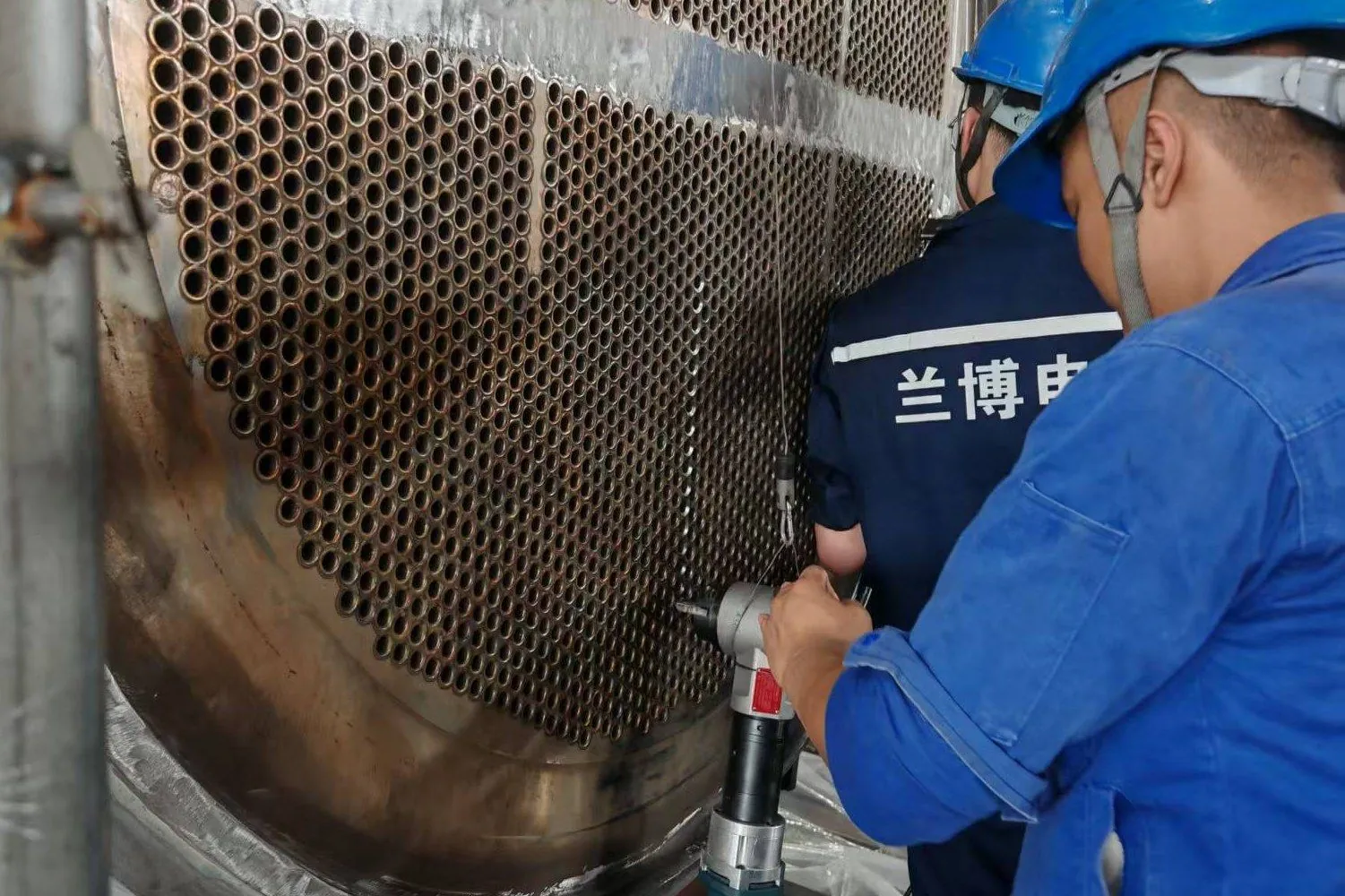
Where collapsing and knockout tools fit
A tube collapsing tool and a tube knockout tool are intended for short stubs that remain after the tube has been cut, and they should be used in a controlled way, by hand or with suitable low-energy drive, while watching the hole. They are not intended to be driven by a demolition hammer against a full-length tube that is still rolled or welded in place.
Practical checks before you start
- Confirm tube material, OD and wall thickness, and whether joints are rolled, welded or both.
- Check the tubesheet thickness and the support plate positions so the cutter can be set to the right cut position.
- Choose a spear that matches the tube ID; a spear that is too small can strip the thread and a spear that is too large can damage the tube hole.
- Inspect several holes after the opening batch of tubes is out. If you see scoring or ovality, stop and review the method before continuing.
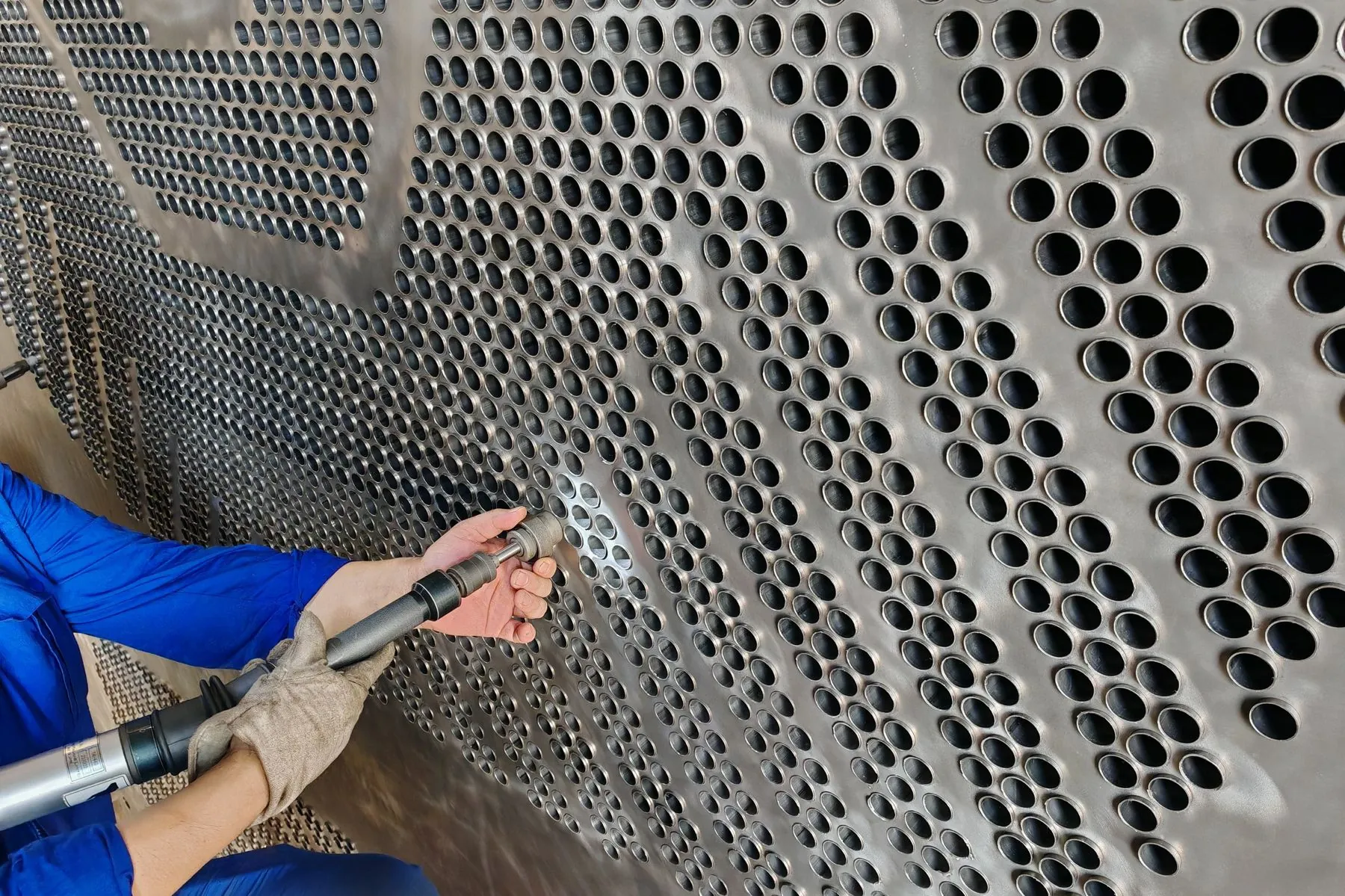
Lanbo tools for this job
- DNQ-A Tube Cutter, Push Type — cuts inside the tube outside the tubesheet, driven by a tube roller
- DNQ-B Internal Tube Cutter — cuts at the support plate, used with a tube puller
- YKB-4 Hydraulic Tube Puller, Screw Type — 6200 kgf, φ12–φ28 mm
- Tube Puller Head, Screw Type — φ7.94–φ32 mm, wall 0.4–2.5 mm (BWG 13–27)
- Tube Collapsing Tool and Tube Knockout Tool — for short stubs, used in a controlled way
- QS-1 Tube Sheet Hole Brushes — for cleaning holes before new tubes go in
If you are planning a retube and want to avoid tubesheet damage, send us the tube material, OD × wall thickness, tube count and joint type (rolled, welded or both). We will suggest a cutter, puller and spear combination for your unit. Request a quote.
FAQ
Is it ever acceptable to use a collapsing tool on a demolition hammer?
Lanbo does not recommend it for tubes that are still rolled or welded into the tubesheet. The impact energy passes into the holes and nearby joints. Collapsing tools are intended for short stubs after cutting, used in a controlled way.
How do I know if the tubesheet has already been damaged?
Look for scoring, burrs, ovality or enlarged holes after the old tubes are out, and check welds on neighbouring tubes. A tube ID gauge after rolling and a leak test on the new joints will show whether the holes still give sound joints.
Is cutting and pulling slower than hammering?
Per tube it can take longer, depending on site conditions, tube material and crew experience. It usually avoids rework on damaged holes, which is where the time on a hammered job tends to be lost.
What pull force do I need?
It depends on tube material, size, joint type and fouling. Lanbo's YKB pullers are rated at 5200 kgf or 6200 kgf depending on model; send your tube data and we will suggest a model.